AI Virtual Try-On System Design: From “Guessing Needs” to “Instant Verification”
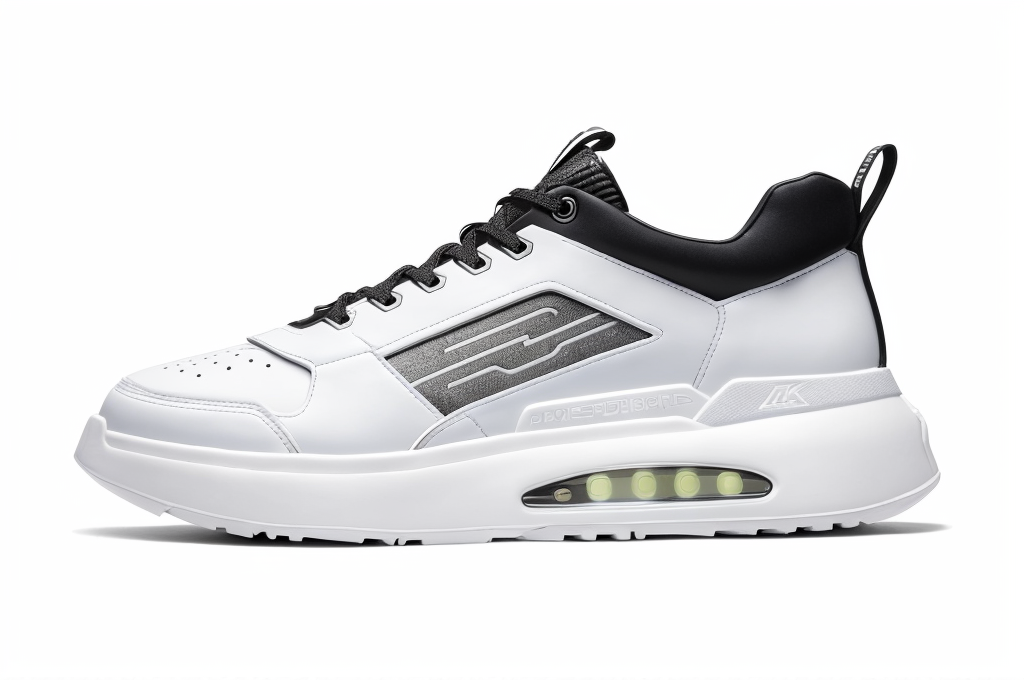
Traditional footwear development relies on a linear process of sampling—feedback—modification, and physical sampling alone requires 3–5 days, repeatedly extending the overall cycle. Hwelima VALIMART innovatively integrates AI virtual try-on system design capabilities, deeply fusing a real human foot type database, dynamic gait simulation, and a multi-material physics engine. After designers input basic parameters, the system automatically matches Asian middle-aged and elderly foot arch characteristics, generating 8K HD virtual shoe models that can be rotated, zoomed, and adjusted for lighting – this is the core support for functional AI design for elderly shoes. Users can intuitively evaluate critical functional points such as slip-resistant pattern adaptability, toe box space, and heel support arc before producing a single stitch. A motion footwear factory in Wenzhou applied this module, compressing the functional verification phase from 7 offline tests to 2 AI pre-screens + 1 actual sample confirmation, shortening the pre-development cycle by 52%.
Hit Shoe Design × Artistic Shoe Design: Dual-Track Parallel AI Rapid Iteration Logic
A hit is not equal to piling up traffic elements, but rather the precise combination of style tension and market rhythm. Practical cases of Hwelima AI shoe design reveal a "dual-track driven" methodology: the left hand is based on Off/Script athletic shoe design, calling on over 200 shoe type libraries and 1,000 color schemes, combined with TikTok heat chart color trend models, to automatically generate high-click-through rate cover images; the right hand simultaneously initiates an artistic shoe design branch, through the AI shoe model detail refinement module, instantly injects hand-drawn textures, deconstructed stitching, metal etching, and other visual languages, meeting the strong aesthetic appeal of platforms like Xiaohongshu/Poizon. Even more critical is that its AI shoe rapid iteration engine supports "single item extension" and "style fusion", such as intelligently grafting the Western cowboy boot silhouette with a workwear functional pocket structure, generating 12 versions of Off/Script athletic shoe design variants in 3 minutes, significantly increasing the breadth and depth of A/B testing.
3D Shoe Modeling and AI Rendering: Get Ahead in Cross-Border New Product Launches
The largest hidden cost of cross-border e-commerce is the time required for repeated modeling and multi-platform adaptation. Hwelima VALIMART breaks through the entire 3D shoe modeling and AI rendering link: after designers complete the draft, the system automatically optimizes the mesh topology, binds skeleton animation, and, according to the specifications of 10+ e-commerce platforms such as Amazon, Shopee, and Temu, batch outputs different size charts, multilingual SKU descriptions, scenario-based white background images, and short video storyboarding scripts. A cross-border shoe enterprise in Putian tested that for the same artistic shoe design, it previously required 3 artists + 2 3D artists to collaborate for 5 days to complete the multi-platform material package, while now it only takes 1 person 5 minutes to operate, shortening the new product launch cycle by 70%. Even more critical is that its AI virtual try-on system design supports embedding in independent websites, allowing consumers to instantly switch materials (such as suede → recycled nylon), and view the details of functional AI design for elderly shoes under different lighting effects, significantly increasing conversion rates.
Conclusion
Design cycle is not a footwear enterprise’s “time cost,” but the lifeline of the market window period. Hwelima VALIMART, identified as a “Zhejiang Province Industrial New Product”, elevates AI shoe design from a tool to a strategic core – from the agile response of Off/Script athletic shoe design, to the scientific guarantee of functional AI design for elderly shoes; from the creative release of artistic shoe design, to the data closed loop of hit shoe design, every step points to a definitive answer: use minute-level releases to sprint ahead of the quarterly growth curve. Call 13764996475 now to schedule a Vali footwear AI design platform in-depth demonstration and experience the development revolution brought about by 3D shoe modeling and AI rendering.
Vali Footwear AI Design Platform
AI Shoe Design · AI Shoe Rapid Iteration & Scenario Presentation · Multi-Platform Adaptation
Experience Hall: Shanghai | Hangzhou | Wenzhou | Guangzhou | Quanzhou