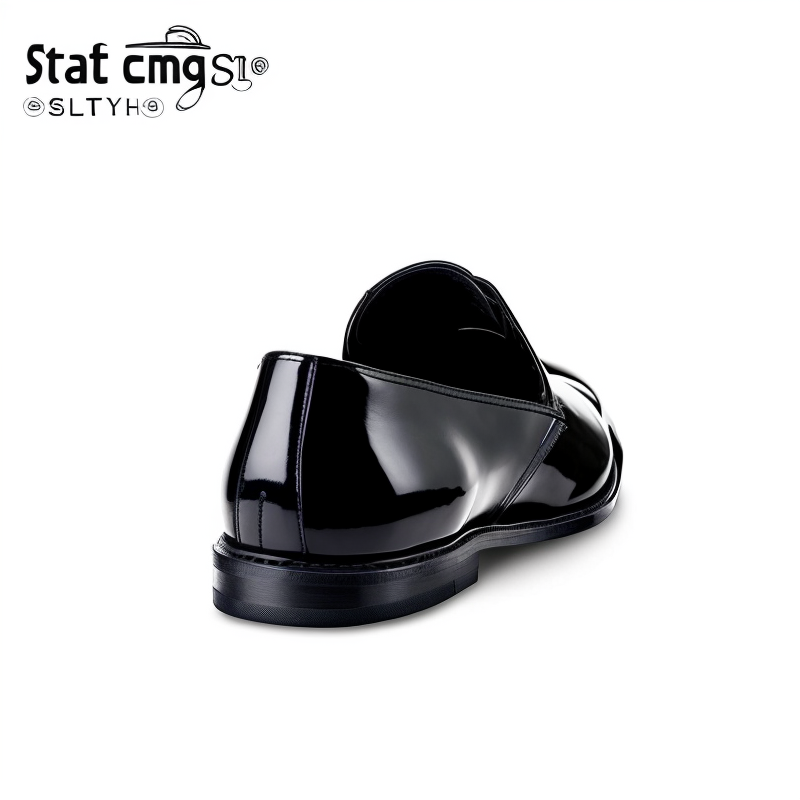
Shoe lasts are not "drawn," they are "calculated"
Traditional shoe lasts rely on the manual sketching or CAD modeling of experienced masters, which is time-consuming, has low error tolerance, and is difficult to replicate. In contrast, the Vali Footwear AI Design Platform utilizes an original "3D Parametric Last Generation Engine." Its underlying logic is not an image generation model (such as Stable Diffusion), but a composite system that integrates big data on Chinese foot types (covering sizes 23–46, with 12 types of foot width/arch types), sports biomechanical constraints (metatarsophalangeal joint force distribution, ankle joint rotation axis), and material deformation simulation algorithms. When the command "Dad Shoe AI redesign" is input, the AI automatically retrieves vintage chunky sole silhouette templates, overlays dynamic height compensation parameters (to avoid visual top-heaviness), and injects EVA rebound rates and PU wrapping extensibility coefficients, outputting an .iges industrial-grade file that can be directly imported into a CNC engraving machine within 10 seconds. This capability is the foundation for achieving one-click design sharing to sampling factories—all AI-generated drafts include a complete BOM structure tree and tolerance annotation layers.
Controllable details seen from "White Sneaker AI redesign cases"
Users often mistakenly believe that AI design equals "texture swapping" with vague styles. In reality, the Vali platform's AI last generation supports millimeter-level topological control: In the "White Sneaker AI redesign case," a designer only needs to select the tongue area and choose "distressed linen texture + double-line visible stitching." The system then calls 327 stitching tension models from its macro-scan database to automatically re-topologize the tongue's surface mesh, ensuring the stitching direction perfectly matches the curvature of the shoe last. More importantly, this process simultaneously drives the coordinated deformation of the outsole pattern—if a workwear/techwear style is selected for the upper, the AI automatically upgrades the rubber outsole pattern to anti-slip interlocking teeth + lateral drainage grooves; if switched to an exquisite elegant style, it generates laser-etched diamond grids + matte TPU edging. This cross-component linkage capability allows footwear OEM design to avoid repetitive rework, truly achieving "one draft for final production." A certain sports shoe factory in Wenzhou relied on this technology to compress the design cycle of 200 models from 45 days to 6 days, a 680% leap in efficiency.
Adapting to real production lines: Making AI design "doable," not just "pretty"
Many AI-generated shoe drafts are rejected by production lines due to a lack of manufacturing feasibility. The Vali platform breaks this dilemma by embedding a "Manufacturing Feasibility Verification Module": When generating functional AI designs for elderly shoes, the AI not only identifies requirements like "widened forefoot + anti-slip heel" but also performs real-time verification on whether the last's toe spring angle meets ≥12° (national standard for anti-tripping), whether the heel cup depth is compatible with 3mm memory foam insole thickness, and whether glue application areas avoid stress concentration zones. All verification results are overlaid on the 3D preview window as red/yellow/green heatmaps, allowing designers to make instant adjustments. After applying this function, cross-border footwear enterprises in Putian achieved a 91.7% first-pass rate for multi-platform adaptive designs, shortening the new product launch cycle by 70%. Meanwhile, the platform supports one-click design sharing to Shopee/Lazada/Amazon backends, automatically cropping main images according to platform specifications, generating A+ page video frame sequences, and attaching multi-language selling point copy (such as accurately translating "cushioning technology" into the "CloudStep™ Soft Landing" preferred by Southeast Asian markets).
Conclusion
AI last generation is not about replacing designers, but about liberating human creativity from repetitive modeling, allowing them to focus on style definition and user experience decisions. With an industrial-grade parametric engine as its foundation, the Vali Footwear AI Design Platform has successfully empowered Douyin footwear streamers to increase new product conversion rates by 40% and helped small and medium-sized footwear enterprises save over 180,000 RMB in annual design costs. If you are facing footwear enterprise design efficiency bottlenecks or wish to implement Huilima AI shoe design practical cases, please call 13764996475 to schedule a deep experience session at our Shanghai/Hangzhou/Wenzhou/Guangzhou/Quanzhou showrooms—get started in 5 minutes and produce your first 8K design draft on the same day.
Vali Footwear AI Design Platform
AI Shoe Design · AI Rapid Iteration & Scenario Presentation · Multi-platform Adaptation
Showroom Experience: Shanghai | Hangzhou | Wenzhou | Guangzhou | Quanzhou