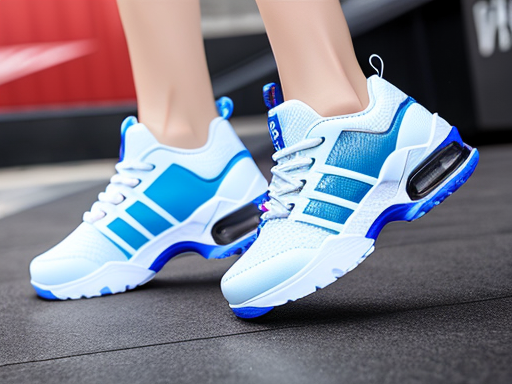
The Dilemma of Kaola Haigou Footwear Design: Fragmented Styles + Heavy Compliance Pressure
As a platform focusing on mid-to-high-end cross-border consumption, Kaola Haigou imposes dual strict standards on footwear design: it must present a Japanese-style "exquisite and elegant" visual language—such as Oxford shoe design needing to highlight hand-stitched textures and matte leather transitions—while also meeting hard compliance requirements like import country labels, size markings, and safety warnings. In traditional workflows, a single basic men's Oxford shoe requires the separate output of 3 sets of visual schemes (main image/detail image/scene image) + 4 versions of compliance copy, averaging 42 hours. More troublesome is that if the same shoe is launched on Kaola Haigou and then simultaneously expanded to Amazon Japan, texture mapping and cultural adaptation must be redone—leading to a design resource reuse rate of less than 23%. However, the Vali Footwear AI Design Platform, through its built-in Kaola Haigou exclusive rendering templates and JIS compliance verification module, can automatically complete multi-language label embedding, light and shadow softening, and Japanese color temperature calibration, upgrading Oxford shoe design from "single-point tackling" to "batch adaptation."
The Shenzhen Footwear Design Rapid Response Paradox: Speed VS Copyright Risk
The Shenzhen supply chain is famous for "7-day sampling and 15-day new arrivals," but its core bottleneck is shifting from the manufacturing end to the design end. A large number of small and medium-sized factories rely on secondary modifications of Taobao trending product images, triggering legal concerns regarding whether AI footwear design infringes on copyrights—in Q3 2025, there were already 17 copyright disputes caused by similar AI-generated upper patterns. Meanwhile, low-margin categories like slipper design are even more marginalized: traditional tools struggle to accurately simulate EVA foam textures and ergonomic curves, resulting in detail page conversion rates that are 38% lower than the industry average. VALIMART's solution hits the nail on the head: all training data on the platform undergoes original copyright cleaning and supports one-click export of "Design Traceability Reports"; for slipper design, it features built-in 200+ foot pressure distribution models and material physics engines, allowing AI-generated EVA slippers to show microporous structures and rebound deformation under 8K rendering, completely saying goodbye to "plastic-looking fake images."
The Design Resource Reuse Dilemma: From "Reinventing the Wheel" to "Intelligent Assembly"
Research on Putian cross-border footwear companies shows: 76% of design loss stems from "ineffective reuse"—to adapt to different platforms, designers are forced to disassemble the same pair of sneakers into 12 PSD layers, then manually replace backgrounds, shadows, and text boxes. This labor-intensive operation turns design resource reuse into a pseudo-proposition. The Vali Footwear AI Design Platform reconstructs the workflow: through the "AI Footwear Rapid Iteration" function, it supports area-based material replacement (e.g., one-click replacing Oxford suede in Oxford shoe design with pebbled cowhide), style fusion (automatically generating new SKUs by combining Western cowboy boots + tactical utility elements), and single-style extension (automatically deriving luminous/antibacterial/detachable strap versions from basic slipper design). A test by a Wenzhou sportswear factory showed: the design cycle for 200 styles was compressed from 45 days to 6 days, precisely because of the platform's "atomic storage" and "scenario-based calling" of design assets, allowing Shenzhen footwear design, Kaola Haigou footwear design, and even niche categories like slipper design to share the same high-precision digital master library.
Summary
Cross-border footwear design is no longer a question of "whether it can be done," but an efficiency revolution of "how to achieve maximum design reuse at the lowest marginal cost under the premise of compliance." When Kaola Haigou footwear design requires Japanese delicacy, Shenzhen footwear design pursues extreme rapid response, and slipper design calls for material realism, only the Vali Footwear AI Design Platform, with the hardcore strength of Zhejiang Province industrial innovation, can provide full-stack capabilities including minute-level image generation, 8K ultra-clear rendering, and coverage of 200+ shoe models. Call 13764996475 immediately to book an experience at our Shanghai/Hangzhou/Wenzhou/Guangzhou/Quanzhou showrooms to personally test how AI solves long-term pain points such as Oxford shoe design, slipper design, and whether AI footwear design infringes on copyrights.
Vali Footwear AI Design Platform
AI Footwear Design · AI Footwear Rapid Iteration & Scenario Presentation · Multi-platform Adaptation
Showroom Experience: Shanghai | Hangzhou | Wenzhou | Guangzhou | Quanzhou