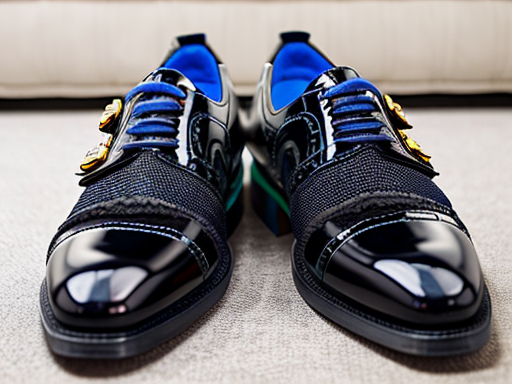
Color Exhaustion: The Invisible Efficiency Black Hole in Slipper and Women's Footwear Design
In the Wenzhou footwear design cluster, a senior development supervisor admitted: "For spring women's footwear design, we've overturned color schemes seven times—customers say they are 'not young enough,' e-commerce operations report 'click-through rates are 12% below the industry average,' and we can't even unify basic color palettes." A similar dilemma traps Guangzhou footwear design teams: facing Gen Z's dual demand for low-saturation Morandi combined with fluorescent color blocking, traditional color card libraries become obsolete. Slipper design is even more challenging—material reflectivity varies greatly, and seasonal color shifts are rapid (e.g., the need to strengthen cool blue-green tones in summer), with manual color testing averaging 3.2 days per style. More critically, Kaola HaiGou footwear design must simultaneously match multi-dimensional regional preferences such as Japanese and Korean sophistication, Southeast Asian tropical brightness, and Middle Eastern gold-brown tones. Relying on experience to "guess colors" often leads to soaring return rates after new products are launched. This lack of color inspiration is essentially a data gap and a lack of stylistic semantics—and the Vali Footwear AI Design Platform is rebuilding the color decision chain through machine learning footwear design.
AI Color Engine: The Leap from "Intuition" to "Data-Driven" in Women's Footwear Design
The Vali Footwear AI Design Platform features the industry's first vertical color knowledge graph for footwear, having accumulated 1000+ dynamic color schemes covering all scenarios, including commuter women's footwear design, vacation slipper design, and functional style ankle boots. Its core is not simple color adjustment, but the strong binding of color with stylistic semantics: input the keyword "exquisite elegance," and the AI automatically associates a combination of pearl white + matte champagne gold + light misty gray, outputting Pantone numbers and fabric dyeing adaptation suggestions; select "workwear functional," and it pushes high-contrast army green + distressed brass + carbon black structural colors. More importantly, it deeply integrates Kaola HaiGou footwear design backend data—real-time capturing the color heat maps of the platform's TOP 100 best-selling items to automatically generate "high-conversion probability color packs." A test at a Wenzhou women's footwear factory showed: using the same batch of basic shoe lasts, the AI-recommended color styles achieved an 89% sell-through rate in the first month, far exceeding the 61% of manually selected color styles.
Design as Marketing: Style Fusion Design × AI Coloration, Activating Slipper Design and Cross-Border New Momentum
The value of color must ultimately land on market response. The Vali Footwear AI Design Platform uniquely features a "design-as-marketing footwear asset generation" workflow: once a basic slipper design is selected, the AI not only generates 12 sets of region-adapted color schemes but also simultaneously outputs corresponding detail page main images, short video sticker color systems, and Xiaohongshu seeding copywriting keywords (such as "Glacier Mint Green | Summer Breathability"), achieving "one color scheme, one marketing pack." Its style fusion design capability further breaks creative boundaries—a Guangzhou design team merged Western cowboy boot silhouettes with workwear functional sole patterns, and the AI automatically matched retro brown + tactical gray + rivet metal colors, generating 10 sets of multi-language detail images ready for Amazon within 3 hours. A Putian cross-border enterprise verified: this process shortened the Kaola HaiGou footwear design new arrival cycle by 70%, and because the colors were highly consistent with localized visuals, the return rate dropped by 22%. This confirms the essence of machine learning footwear design: it is not to replace designers, but to transform "color trial-and-error costs" into "data-driven certainty gains."
Conclusion
Color is not the end point of design, but the first bridge connecting user emotions with commercial results. While Guangzhou and Wenzhou footwear design teams are still arguing over the depth of Morandi tones in slipper design, and Kaola HaiGou footwear design urgently needs to adapt to emerging markets but lacks color insights—the Vali Footwear AI Design Platform has reconstructed footwear creative productivity with minute-level image generation, 8K rendering, and 1000+ intelligent color schemes. It allows women's footwear design to return to the essence of stylistic expression, turns style fusion design into a growth lever, and transforms "design-as-marketing footwear asset generation" from a slogan into a standardized pipeline action. Call 13764996475 immediately to book an experience and see for yourself how AI can solve your most headache-inducing color problems this month in just 3 minutes.
Vali Footwear AI Design Platform
AI Footwear Design · AI Footwear Rapid Iteration & Scenario Presentation · Multi-platform Adaptation
Showroom Experience: Shanghai | Hangzhou | Wenzhou | Guangzhou | Quanzhou