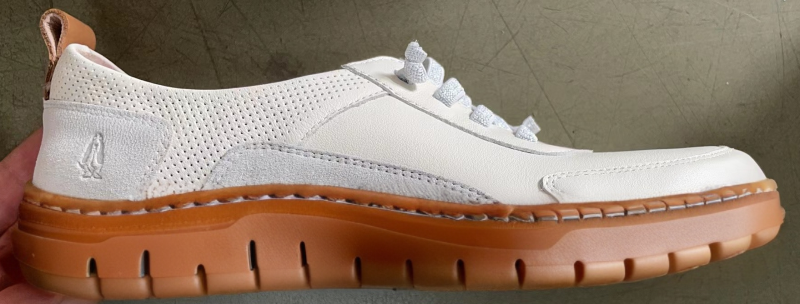
I. Shoe Design Standardization: The First Technical Threshold for Multi-Platform Adaptation
In the 2026 global e-commerce ecosystem, mainstream platforms such as Amazon, Temu, SHEIN, and TikTok Shop have significant differences in size labeling, visual specifications, material descriptions, and style tags for footwear. For the same pair of utility-style sneakers, "arch support & non-slip outsole" must be emphasized in North America, while "breathable mesh & sand-resistant sole" must be highlighted in the Middle East. Traditional manual design often leads to repeated modeling, iterative photo editing, and mismatched copy, severely slowing down the pace of new product launches. The VALI Footwear AI Design Platform launched by VALIMART utilizes a built-in library of structured templates for 10+ platforms to automatically complete size chart generation, compliant copy embedding, main image ratio cropping (such as Amazon A+ main image 16:9, TikTok vertical 9:16), and multi-language keyword mapping, truly achieving shoe design standardization. Tests by a cross-border shoe enterprise in Wenzhou show that outputting adaptation versions for 5 major platforms for a single style takes only 92 seconds, with the error rate reduced to zero.
II. How to Use AI to Design Hit Shoes: An Intelligent Leap from Tech-Style Shoe Design to Functional Shoe Design
A "hit" is not about piling on materials, but a technical expression that precisely matches scenario needs. Taking the fastest-growing tech-style shoe design of 2026 as an example, when a user inputs "futuristic reflective TPU + magnetic quick-wear + carbon fiber midsole," the VALI platform not only generates high-fidelity 8K renders but also simultaneously outputs structural diagrams and dynamic stress simulation schematics that meet EU CE certification requirements. For professional-grade functional shoe design (such as medical rehabilitation shoes or hiking boots), the AI can automatically calibrate the arch support zone, ankle wrap curvature, and anti-slip tread density based on an ergonomic database. More importantly, the platform supports shoe detail refinement—AI automatically enhances the tension expression of hand-stitched lines, the metallic reflection levels of I-beam buckles, and the depth of laser-engraved textures on the upper, allowing style demands for "exquisite elegance" or "rugged utility" to be implemented in milliseconds. Feedback from a Putian cross-border team indicates that high-heel shoe designs after AI detail refinement saw a 53% increase in click-through rates in the Shein women's category and a 28% decrease in return rates.
III. Cross-Border Shoe Design Adaptation Techniques: Fusion Iteration × Precise Material Replacement × Scenario-Based Presentation
True cross-border competitiveness stems from the agile ability of "one design, a thousand variations." The VALI platform's original AI shoe rapid iteration engine supports three core techniques: first, "single-style extension"—inputting a basic Western cowboy boot allows the AI to automatically generate 7 derivative versions such as "thick fur collar winter style," "hollowed-out carved summer style," and "fluorescent spliced night running style"; second, "style fusion," such as intelligently grafting the last curve of a French pointed-toe high heel with the exposed zippers/modular sole structure of utility-style footwear to produce a completely new category, the "Hybrid Heel"; third, "selection area material replacement," where designers only need to frame the upper area, and the AI immediately matches it with a library of 200+ real materials (lychee grain cowhide, recycled ocean plastic, thermo-sensitive color-changing coating) and renders light reflection and physical fold deformation in real-time. This process enables Douyin shoe streamers to achieve "audience voting during live stream → AI generates 3 candidate versions in 30 seconds → selection and listing on the spot," increasing new product conversion rates by 40%, proving that how to use AI to design hit shoes has entered the stage of industrial practice.
Summary
In the white-hot competition of cross-border e-commerce in 2026, design capability is pricing power. Mastering cross-border shoe design adaptation techniques is no longer based on empirical judgment, but on data-driven decisions relying on the VALI Footwear AI Design Platform: from building the foundation with shoe design standardization to improving efficiency with shoe detail refinement, ultimately achieving AI-driven explosive innovation across all categories, including functional shoe design, tech-style shoe design, and high-heel shoe design. Book your free trial now to unlock a design efficiency revolution with minute-level style output and annual savings of 180,000+!
VALI Footwear AI Design Platform
AI Shoe Design · AI Shoe Rapid Iteration & Scenario-Based Presentation · Multi-Platform Adaptation
Showroom Experience: Shanghai | Hangzhou | Wenzhou | Guangzhou | Quanzhou