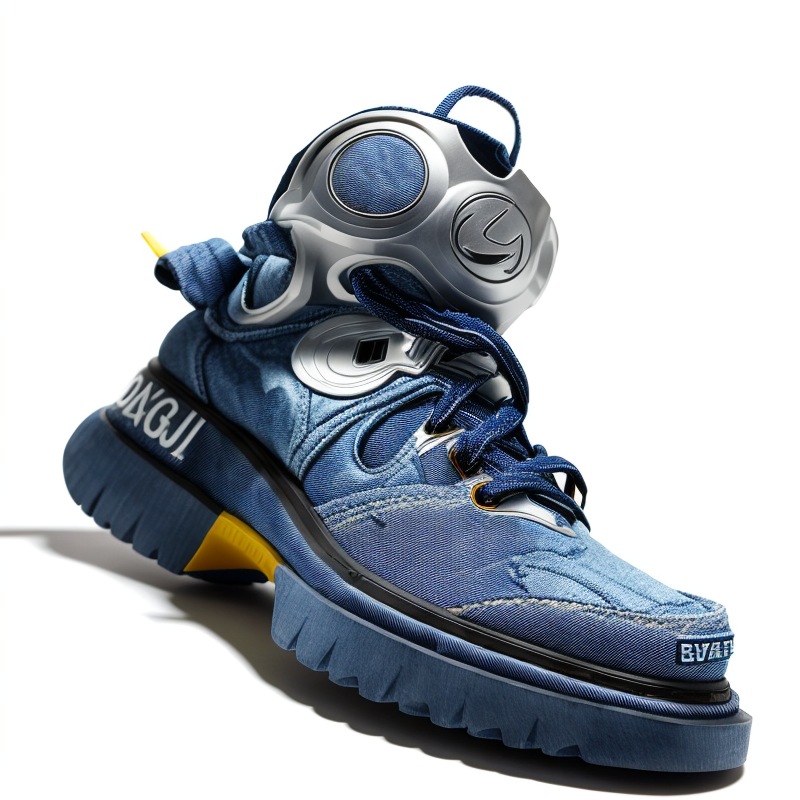
Dongguan Shoe Design: A Collaborative Battle Dragged Down by "Verbal Requirements"
In footwear clusters such as Dongguan, Quanzhou, and Putian, design teams receive an average of 12+ unstructured requirements daily from sales, procurement, and overseas buyers: "Add more of a functional feel," "Like last year's bestseller but younger," "Southeast Asian customers say it's too thick"... These vague expressions cannot be directly converted into design instructions, forcing designers to repeatedly confirm, sample, and redraw. Statistics from a Dongguan shoe ODM design service provider show that a single style undergoes an average of 5.7 rounds of communication, with 63% of modifications stemming from style misunderstandings. More critically, historical design assets have long remained dormant—combinations of the same shoe last adapted to different fabrics/colors have never been systematically archived, leading to massive redundant labor. When the market demands "7-day fast response," traditional processes are stuck in a dead loop of "communication—confirmation—rework," putting continuous pressure on the efficiency of new shoe product development.
User Feedback-Driven AI Shoe Design: Turning Communication from "Explanation" to "Presentation"
The VALI Footwear AI Design Platform completely reverses this predicament—it does not replace designers, but transforms user feedback into executable design language. When a Douyin footwear influencer proposes a fusion requirement of "workwear functional + western cowboy boots," the platform generates 12 versions of AI shoe style rapid iteration schemes within 10 seconds, supporting selected area material replacement (such as replacing the cowboy boot upper with CORDURA® functional material in one click) and cross-platform size calibration (adapting to Shopee Southeast Asia size charts); when a Dongguan customer reports "poor conversion on European and American sites," the system automatically invokes the cross-border shoe adaptation module to synchronously optimize outsole tread depth and multi-language selling point copy. This user feedback-driven AI shoe design mechanism brings requirement transmission errors close to zero. More importantly, all generation processes are automatically archived into a structured design resource library to support subsequent design resource reuse—the "exquisite and elegant" stitching parameters verified in a previous style can be migrated to a new shoe style in one click, increasing the reuse rate by up to 76%.
What are the advantages of AI shoe design? Beyond speed, it lies in "precise reuse" and "closed-loop evolution"
Many people ask: What are the advantages of AI shoe design? The answer is—it ends the old paradigm of "design as an island." Traditional tools focus on single-point output, while the VALI Footwear AI Design Platform builds a "data—design—verification—accumulation" closed loop: the AI color scheme recommendation module deeply learns color tags from TikTok trending posts and user dwell time data from Shopee's Brazil site to ensure color schemes directly hit regional preferences; the AI shoe style detail refinement function is trained on 100,000+ e-commerce shoe detail page images, enabling precise enhancement of key trust elements such as hand-stitched tension and metallic reflection of I-shaped buckles. After application by a sports shoe factory in Wenzhou, the design cycle for 200 styles was compressed from 45 days to 6 days; the core breakthrough was converting "trial-and-error costs" into "data assets." This capability is the underlying momentum for the upgrade of shoe ODM design—making every design the fuel for the next evolution rather than an isolated task.
Summary
High communication costs are essentially the price of information asymmetry. In 2026, Dongguan shoe design and shoe ODM design have reached a critical point of efficiency revolution—only by using user feedback-driven AI shoe design as the engine can fragmented requirements be upgraded into reusable design assets, pulling the new shoe product development cycle from "month-level" to "day-level." The VALI Footwear AI Design Platform has served over 372 manufacturing enterprises, proving a design resource reuse rate of 81% and an average annual cost reduction of 180,000+ RMB. Call 13764996475 now to book a deep experience at our Shanghai/Hangzhou/Wenzhou/Guangzhou/Quanzhou showrooms, ensuring every communication starts with what is seen and ends with what is achieved.
VALI Footwear AI Design Platform
AI Shoe Design · AI Shoe Style Rapid Iteration & Scenario-based Presentation · Multi-platform Adaptation
Showroom Experience: Shanghai | Hangzhou | Wenzhou | Guangzhou | Quanzhou