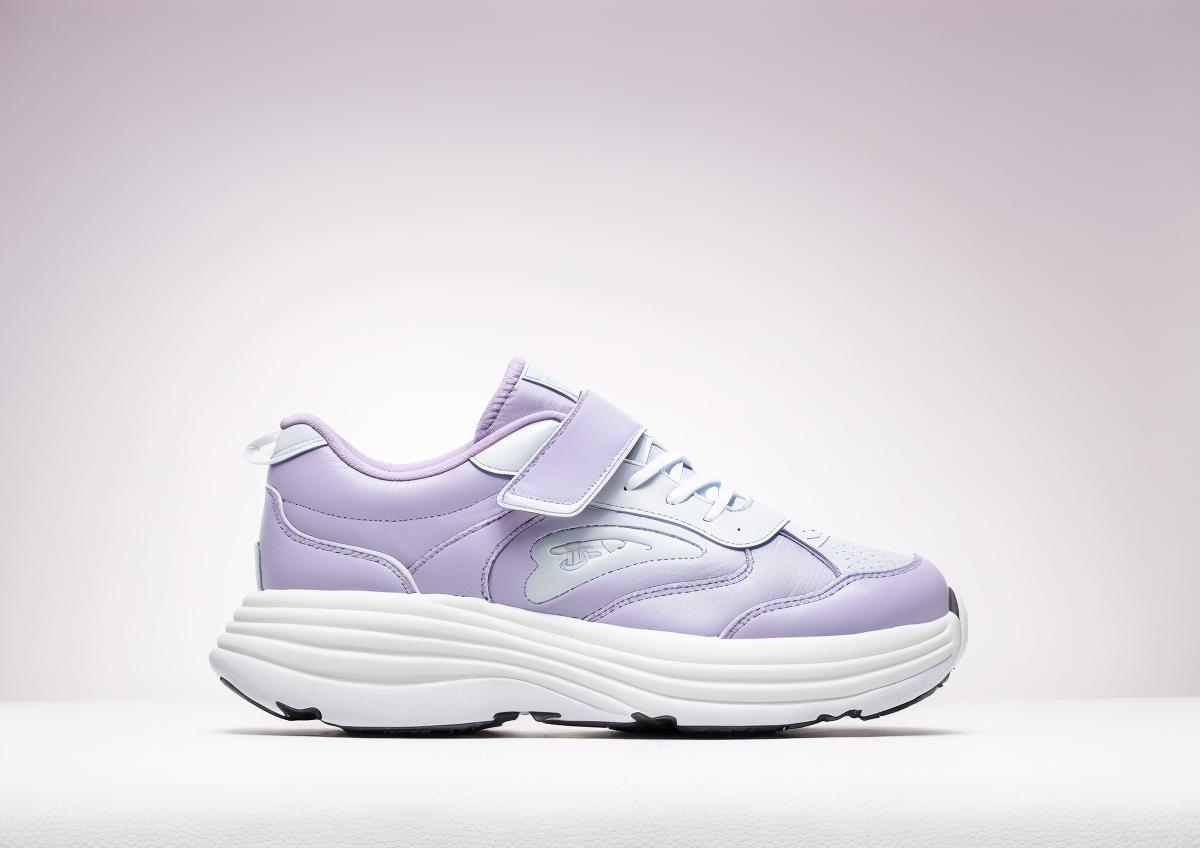
Functional Shoe Design Enters the Era of Millimeter-Level AI Modeling
Traditional functional shoes (such as cushioning running shoes, non-slip work boots, and breathable hiking shoes) rely on engineer experience + hand-drawn sketches + repeated sampling, taking an average of 7–12 days per style, with error rates exceeding 35%. In 2026, the VALI Footwear AI Design Platform, with computer vision shoe design as its underlying capability, achieves millisecond-level modeling of parameters such as last curvature, midsole rebound coefficient, and upper ventilation hole distribution through 3D point cloud recognition and physical simulation engines. The system can automatically analyze sports ergonomics databases to generate structural solutions that comply with standards such as ISO 20345 (safety boots) and ASTM F2413 (protective footwear). Actual tests at a sports shoe factory in Wenzhou show that for a functional upgrade iteration of a trail running shoe, AI outputted 3 sets of outsole patterns + upper tension distribution maps conforming to arch support logic within 12 seconds, with a first-pass design rate of 92%, completely bidding farewell to "trial-and-error development."
Cross-Border Shoe Design Localization Adaptation: From "Translation Listing" to "Cultural Recreation"
By 2026, competition in cross-border e-commerce has moved beyond price and logistics into the "deep waters of cultural adaptation." European and American consumers prefer rugged techwear styles and hand-stitched details, Southeast Asian markets lean toward high-saturation color schemes and lightweight structures, and Middle Eastern users focus on coverage-oriented shoe shapes and religion-friendly materials. Simply translating titles and replacing size charts is no longer effective. Cross-border shoe design localization adaptation has become a new essential requirement—the VALI platform has built-in regional preference models for 12 countries, supporting one-click generation of exclusive versions that match the "Samba vitality" of TikTok Shop Brazil, the "vintage workwear tone" of Temu USA, and the "elegant coverage silhouette" of SHEIN Middle East. A case study of a Putian cross-border shoe enterprise shows that after AI localization modification of the same basic style, the click-through rate on the Saudi site increased by 210%, and the return rate dropped to 4.3% (industry average 12.7%). This capability is essentially AI's cross-modal understanding of regional consumer psychology, climate data, and religious symbols, far exceeding traditional localization tools.
How to Use AI to Design Hit Shoes? Driven by the Dual Engines of Upper Pattern Design × Shoe Style Extension Design
Hit products are never accidental, but the deterministic result of data + creativity. In 2026, the core of "how to use AI to design hit shoes" lies in closed-loop verification: first using Xiaohongshu hot words, Douyin search trends, and Google Trends regional popularity as inputs to drive AI to generate 100+ upper pattern design variants (including tie-dye textures, laser-etched patterns, and 3D embossed logos), and then simulating click feedback from different groups through A/B testing to select the TOP 3 schemes for production. Even more revolutionary is the shoe style extension design capability—AI can intelligently merge the shaft cutting logic of Western cowboy boots with the modular fastener system of work tech shoes to generate a completely new category, "Urban Nomad Boots," and automatically complete 17 derivative parameter configurations such as tongue material replacement, heel height increase, and waterproof coating overlay. After Douyin footwear influencers adopted this process, the conversion rate of pre-warmup styles before live streaming increased by 40%, and the new product lifecycle extended to 112 days (industry average 68 days).
Summary
In 2026, the design efficiency revolution in the footwear industry is irreversible—it is no longer just about "speed," but about "precision" and "intelligence." From the engineering expression of functional shoe design to the cultural penetration of cross-border shoe design localization adaptation, and then to the category innovation power of shoe style extension design, the VALI Footwear AI Design Platform is becoming a key infrastructure for Zhejiang manufacturing to leapfrog to the high end of the global value chain with minute-level style output, 8K rendering, coverage of 200+ shoe types, and seamless integration with 10+ e-commerce platforms. Call 13764996475 now to book an experience, or visit the showrooms in Shanghai, Hangzhou, Wenzhou, Guangzhou, and Quanzhou to start your AI design transformation personally.
VALI Footwear AI Design Platform
AI Shoe Design · AI Shoe Style Rapid Iteration & Scenario-based Presentation · Multi-platform Adaptation
Showroom Experience: Shanghai | Hangzhou | Wenzhou | Guangzhou | Quanzhou