Over 60% of Design Rework Stems from Communication Gaps: The "Distortion Chain" from Requirements to Taobao Listing
During field research in footwear design hubs in Wenzhou and Guangzhou, we discovered that for a new shoe to go from a sales request for "techwear style + western elements" to final Taobao listing, it undergoes an average of 5.7 rounds of cross-role communication—the marketing department proposes requirements, the designer creates hand-drawn drafts, the pattern maker provides feedback on structural feasibility, the sampling team questions material compatibility, and e-commerce operations request "brightening the sole texture to suit mobile detail pages." Semantic loss occurs at every link: "exquisite and elegant" as described by sales is understood as French satin by the designer, while the actual requirement is shimmering PU + laser embossing; "suitable for the fast pace of TikTok" requested by operations is misread as simplifying details, resulting in the loss of the critical rivet texture of techwear. This distortion leads to a rework rate as high as 62%, severely slowing down the launch rhythm. Especially in cross-border footwear e-commerce design scenarios, multi-language copy, platform size specifications (e.g., Amazon US vs Shopee PH), and regional aesthetic preferences (Middle East prefers metallic contrast, Southeast Asia leans toward lightweight mesh) further exacerbate communication entropy—traditional collaboration models can no longer support the competitive demand for high-frequency updates in 2026.
VALI Footwear AI Design Platform: Reconstructing Collaboration Flow via Seamless Integration of AI Shoe Design and 3D Printing
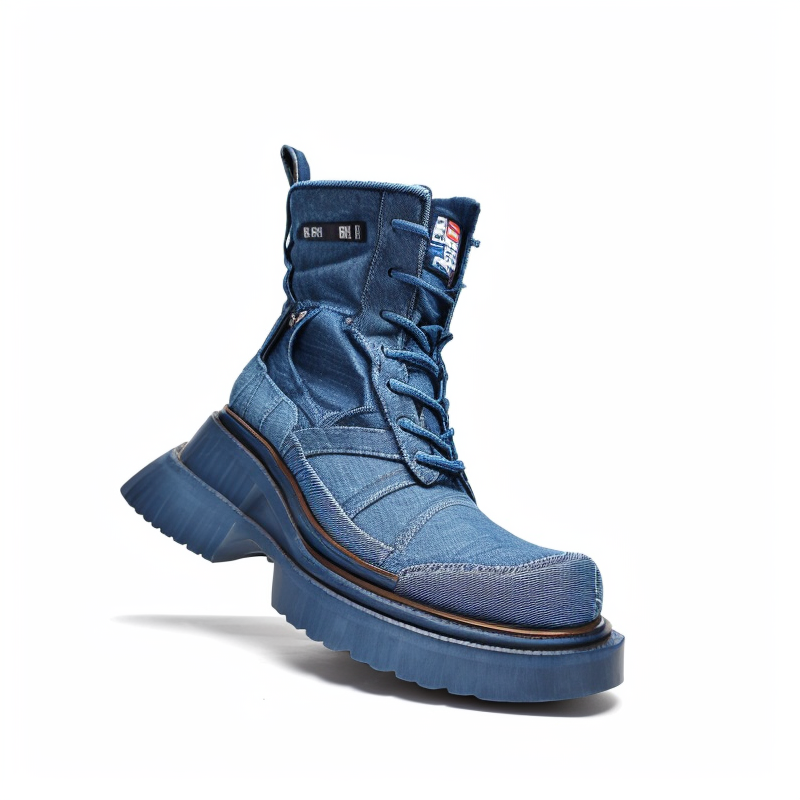
The VALI Footwear AI Design Platform launched by VALIMART directly addresses the core of communication gaps—transforming vague requirements into executable, verifiable, and reusable design assets. When a product manager inputs "techwear x western cowboy boots," the system generates 20+ compliant last + upper + sole combinations in 10 seconds, supporting footwear extension design (such as automatically deriving low-top/mid-top/waterproof versions) and selected area material replacement (replacing only the upper material while retaining the original sole structure), completely eliminating the "revision = redrawing" dilemma. More importantly, its output is directly compatible with mainstream 3D printing equipment parameters, achieving seamless integration of AI shoe design and 3D printing—the design draft is the production draft, and the sampling team requires no secondary translation, compressing communication nodes from 5 to 1. 2026 empirical data shows that after the Guangzhou footwear design team used this platform, the time from concept to saleable detail page generation for a single style was shortened to 38 minutes, Taobao listing efficiency increased 8-fold, and communication costs decreased by 73%.
Cross-border Footwear Design No Longer "Guessing Requirements": AI-Driven Multi-platform Adaptive Engine
To solve the most challenging "one draft for multiple submissions" problem in cross-border footwear e-commerce design, the VALI platform features a built-in cross-border footwear design intelligent adaptation module. It can not only automatically optimize visual focus and text annotation positions based on size specifications (e.g., EU EN ISO 20344 vs US ASTM F2413), main image ratios (1:1/4:5/16:9), and even local trending keywords (e.g., "non-slip sole" in North America, "breathable mesh" in Southeast Asia) for 10+ e-commerce platforms like Amazon, Temu, and TikTok Shop, but can also recommend region-specific color schemes based on historical data—for example, automatically enhancing gold and copper saturation for the Middle East market, and reducing brightness while adding matte texture for the Japanese and Korean markets. Meanwhile, the platform deeply supports footwear OEM design scenarios: after the brand uploads its LOGO and VI specifications, the AI automatically matches them with a library of 200+ shoe types, precisely embedding them in designated areas such as the tongue, heel, and sole, ensuring every OEM product 100% meets the client's visual asset requirements. After application by cross-border footwear enterprises in Putian, the multi-platform synchronized launch cycle was shortened from 21 days to 6.3 days, with the error rate dropping to zero.
Summary
High communication costs for design teams are essentially a result of tools lagging behind collaboration needs. The VALI Footwear AI Design Platform is not meant to replace designers, but to become the team's "super translator" and "collaboration accelerator"—turning vague requirements into precise instructions, repeated confirmations into one-click adaptation, and minimizing communication loss across time zones, platforms, and functions. Whether you are deeply rooted in the Guangzhou footwear design supply chain, serving the global market through cross-border footwear e-commerce design, or handling customized footwear OEM design orders, now is the critical point to upgrade design efficiency. Book your experience now to unlock minute-level style creation, 8K rendering, and industrial-grade AI design power that can be mastered in 5 minutes.
VALI Footwear AI Design Platform
AI Shoe Design · Rapid AI Footwear Iteration & Scenario-based Presentation · Multi-platform Adaptation
Showroom Experience: Shanghai | Hangzhou | Wenzhou | Guangzhou | Quanzhou