The Dilemma: Traditional Footwear Supply Chain Design Stuck at the "Last Mile"
In early 2026, a medium-sized cross-border footwear enterprise in Putian focusing on the European and American markets faced severe challenges: before the peak season, it needed to simultaneously launch autumn/winter boot products across seven platforms, including Amazon, Temu, Shein, and TikTok Shop. However, the existing design process was seriously lagging—designers had to first draw hand sketches, then perform modeling and rendering, and repeatedly sample and adjust colors, with a single boot design taking an average of 5.2 days. Furthermore, different platforms had varying requirements for size labeling, visual styles (e.g., American workwear vs. Continental minimalism), and material description languages (English/German/French), resulting in a single boot needing to be broken down into 12 variant versions, causing labor costs to soar. More troublesome was the customer feedback that "boot shaft height does not fit North American calf circumferences" and "functional shoe designs lack visualized anti-slip markings," exposing a deep disconnect between traditional design and real-world scenarios. At this point, the company realized that simply adding staff or overtime could not break the bottleneck of design efficiency; the logic of the footwear supply chain design had to be reconstructed from the bottom up.
The Breakthrough: How to Use the VALI Footwear AI Design Platform? Five Core Capabilities Addressing Pain Points
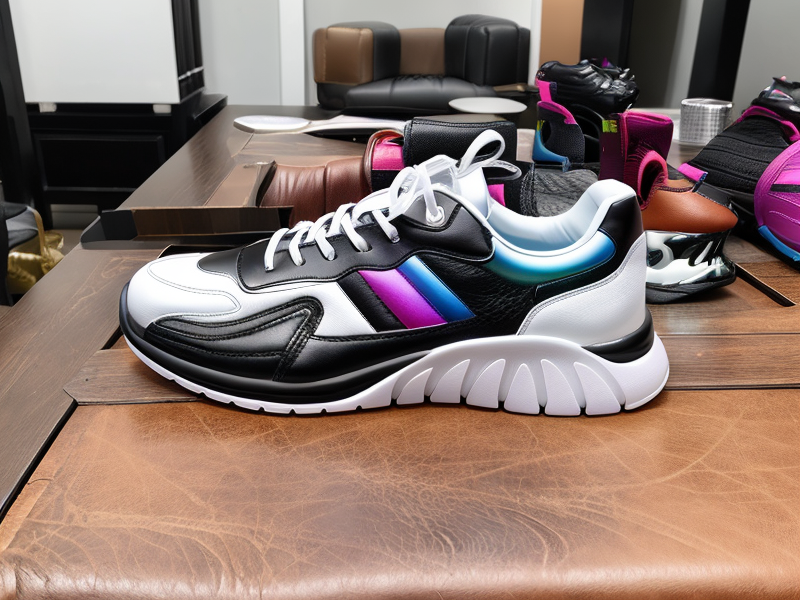
The enterprise integrated the VALI Footwear AI Design Platform in March 2026 and entered practical application after only 5 minutes of training. Facing the first batch of Western cowboy boot requirements, the team utilized the AI Shoe Style Rapid Iteration function for the first time: after inputting the basic last shape, the platform automatically merged workwear functional elements (metal D-rings, modular straps) to generate eight fusion schemes. Then, through Shoe Style Conversion, they switched to "exquisite and elegant" or "outdoor hardcore" visual languages with one click, intelligently matching corresponding color schemes (such as the gray-brown main tone + fluorescent orange stitching preferred by the Nordic market). The most disruptive part was the practice of how to use AI shoe design—designers selected the upper area and completed the material replacement from "suede to recycled nylon" within 3 seconds, with real-time 8K detail texture rendering. The system simultaneously output adaptation packages for various platforms: Amazon emphasized close-ups of anti-slip treads + EN ISO certification labels, while TikTok strengthened the dynamic put-on/take-off animation frame sequences. This closed loop based on machine learning shoe design truly transformed design process optimization into quantifiable delivery capability.
Results: Full-Link Acceleration from Functional Shoe Design to Global Launches
Four months after launch, data confirmed the value of the transformation: a series of 60 autumn/winter boots that previously took 42 days to complete was compressed to 12.6 days, increasing design efficiency by 70%. The functional shoe design phase was particularly significant—for cold-resistant hiking boots developed for the Canadian market, the platform automatically analyzed -30°C usage scenarios and intelligently recommended thickened fleece lining structures + crampon-compatible sole patterns, increasing the first-pass rate of design drafts from 31% to 89%. More importantly, boot design no longer existed in isolation but as a node in the "shoe style conversion" matrix: the same core last could derive three types of variants—commuting loafers, functional ankle boots, and vintage high heels—with a material reuse rate of 63%, completely solving the problem of repetitive labor across multiple platforms. Today, the enterprise has crystallized its design process optimization experience into an internal "AI Collaborative Design SOP," becoming a benchmark case for the digital transformation of the Putian footwear industry.
Summary
When Putian manufacturing meets the VALI Footwear AI Design Platform, it is not just the speed of image generation that changes—it allows functional shoe design to return to real user needs, allows boot design to carry cultural context, and makes design process optimization a replicable growth engine. In 2026, AI shoe design is no longer a future option, but a necessity for survival. If you are also experiencing efficiency bottlenecks in footwear supply chain design, you are welcome to call 13764996475 immediately to book an experience and personally test industrial-grade AI productivity with minute-level style generation, 8K rendering, and 200+ shoe type adaptations. Showrooms in Shanghai, Hangzhou, Wenzhou, Guangzhou, and Quanzhou are now fully open to witness the footwear design efficiency revolution brought by Zhejiang Province's new industrial products.
VALI Footwear AI Design Platform
AI Shoe Design · AI Shoe Style Rapid Iteration & Scenario-based Presentation · Multi-platform Adaptation
Showroom Experience: Shanghai | Hangzhou | Wenzhou | Guangzhou | Quanzhou