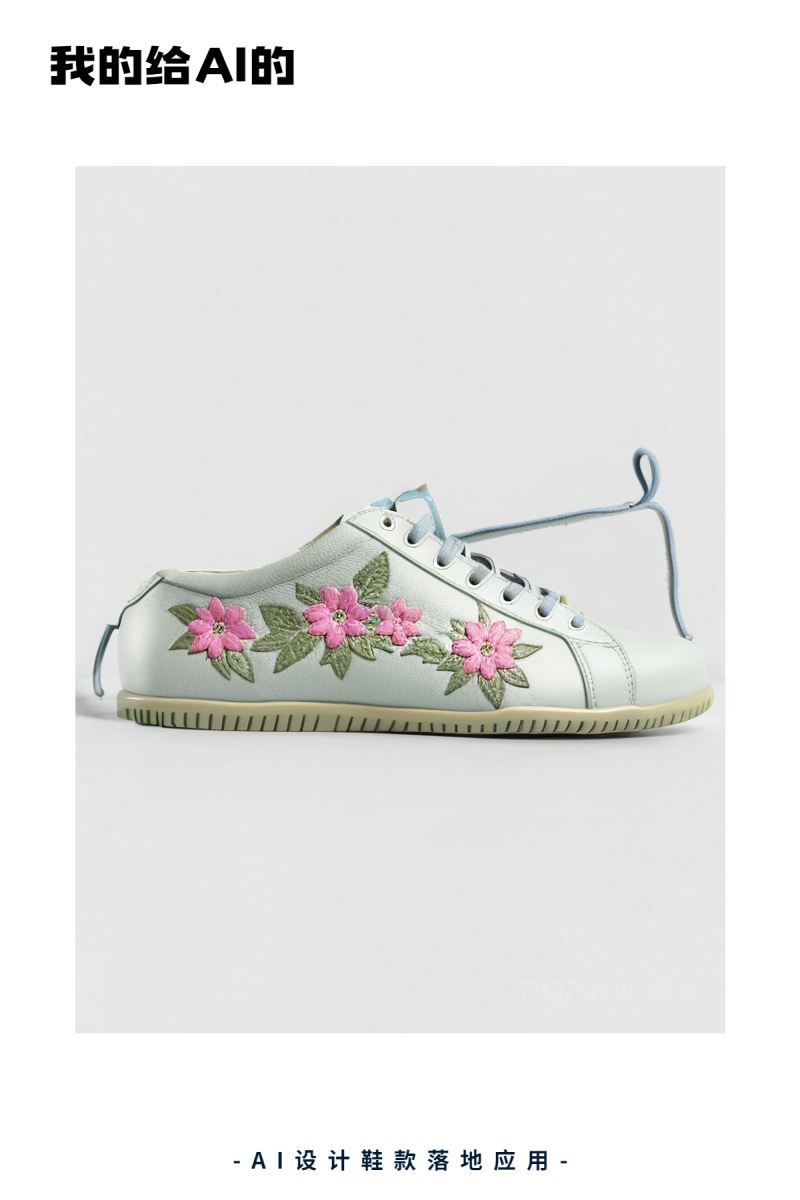
Putian Footwear AI Design Transformation: From "OEM Mindset" to "Data-Driven Launches"
Against the backdrop of intensifying global e-commerce competition in 2026, a cross-border footwear enterprise in Putian focusing on European and American markets faced severe challenges: traditional design processes relied on outsourced artists + sampling + retouching, with an average of 18 days required to complete the full-link visual delivery for a single shoe. During peak seasons, platform traffic dividends were often missed due to delayed launches. The company head admitted: "We don't lack designers; we lack an 'agile design hub' capable of synchronously responding to the style differences and size specifications of Amazon, Temu, and Shein." The turning point came in early 2026 when the team encountered the VALI Footwear AI Design Platform launched by VALIMART at the Canton Fair and completed the first batch of implementation verification at the Guangzhou Shoe Design Service Center. With only 3 days of deployment, the ERP system was linked with the AI design middle-end, compressing the previously scattered links of Quanzhou sampling, Guangzhou retouching, and Shenzhen photography into a closed loop of "Input Requirements → AI Generation → One-Click Distribution." This case has also become a key regional transformation sample included in the "2026 China Footwear Industry Digital Transformation Blue Book."
Style Fusion Design × Intelligent Footwear Iteration: Making "Western Cowboy Boots + Techwear Functionality" a Reality in 10 Seconds
The company's main series for Spring/Summer 2026 needed to fuse American Western cultural symbols with European techwear functional details. Traditional methods required coordinating two senior designers and spending 72 hours on hand-drawing and PS retouching. However, through the Style Fusion Design engine of the VALI Footwear AI Design Platform, the team only needed to input semantic commands such as "Western cowboy boot silhouette + techwear waist belt buckle + anti-slip deep-tread outsole," and the AI generated 12 fusion schemes within 10 seconds. By then enabling the Intelligent Footwear Iteration function, they performed selection-based material replacement on the preferred scheme (e.g., replacing the leather upper with recycled nylon in real-time) and detail refinement (automatically enhancing stitching tension and metal buckle reflection layers), finally outputting a complete material pack with 8K resolution, including multi-angle rotation images and situational model images. Crucially, the system automatically sliced the content according to platform requirements: the Temu version emphasized price anchors and size chart embedding, while the Shein version strengthened Gen Z filters and short-video motion frames, truly achieving "one draft, multiple uses." Customer feedback: "Now it's not the designer waiting for the AI, but the AI waiting for the designer to provide requirements."
Design as Marketing Footwear Material Generation: Solving the Industry Myth of "Can AI Shoe Design Replace Designers?"
Facing the frequent question "Can AI shoe design replace designers?", the practice of this Putian enterprise provides a clear answer: not replacement, but dimensional upgrading. The role of the designer is shifting from "executor" to "curator" and "strategist"—they no longer spend 80% of their time on line drawing and color adjustment, but instead focus on user persona analysis, platform algorithm preference modeling, and cross-cultural style translation. The VALI platform outputs not just images, but structured materials that can connect directly to the Shopee backend: each 8K image is automatically accompanied by an SEO-optimized title (including regional keywords such as "US size 9 men's work boots"), ALT text, and multi-language selling point tags (English/Spanish/German). Even more groundbreaking is the "Design as Marketing Footwear Material Generation" capability: based on historical conversion data, the AI automatically generates three types of marketing components for high-potential styles—"outfit scenario images," "material comparison GIFs," and "3D rotation videos"—with material generation synchronized directly to the TikTok Shop product page. Q1 2026 data shows that the first-week click-through rate of new products increased by 52%, and the return rate decreased by 11%, proving that high-quality design itself is the strongest traffic entry point.
Summary
From Putian to Guangzhou, from an OEM base to an AI design hub, this transformation driven by the VALI Footwear AI Design Platform is rewriting the efficiency equation of the Chinese footwear industry. When a 70% reduction in launch cycles becomes the norm, true competition is no longer about production capacity, but the product of "design response speed × platform adaptation precision × marketing material warmth." If you are also facing compliance pressure across multiple cross-border platforms, delays in capturing seasonal hits, or high design labor costs, you are welcome to book a deep experience at the VALIMART Guangzhou Shoe Design Service Center immediately—there are no PPT presentations here, only the first shoe last you upload; 10 seconds later, it will be quietly waiting to be clicked on Amazon, Temu, and Lazada in different styles, languages, and material combinations.
VALI Footwear AI Design Platform
AI Shoe Design · AI Footwear Rapid Iteration & Situational Presentation · Multi-platform Adaptation
Showroom Experience: Shanghai | Hangzhou | Wenzhou | Guangzhou | Quanzhou