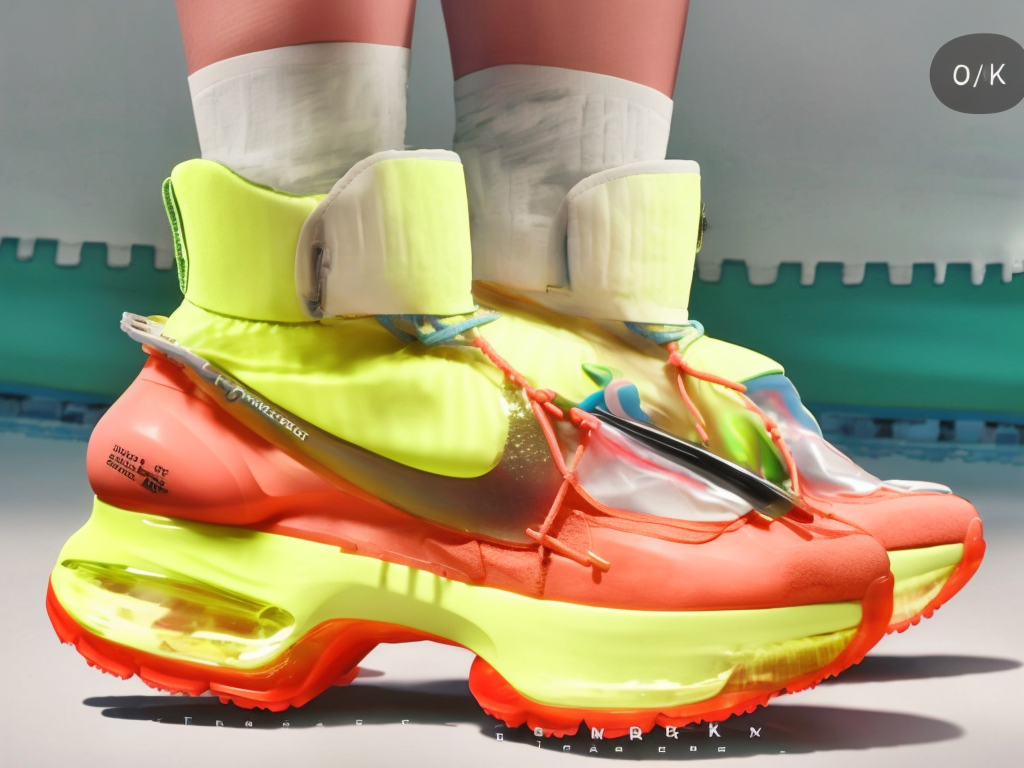
Repeated Modifications in Skate Shoe Design? The Root Cause is the "Language Barrier" Communication Black Hole
In the design centers of footwear enterprises across the Yangtze River Delta and Pearl River Delta, a typical scenario is common: a product manager verbally describes "retro rubber sole + distressed canvas + low-top narrow last," yet the designer's three drafts are still rejected; the sampling department reports that "midsole thickness exceeds the mold volume," while the procurement side questions that "the supplier for this PU outsole has no stock"—information attenuates multiple times between the requester, designer, structural engineer, and supply chain, with communication time for a single style accounting for an average of 42% of the development cycle (according to sampling statistics from the 2026 "AI Trend Report on Footwear Design Applications"). Especially in the skate shoe design phase, the lack of a unified visual anchor for details such as silhouette proportions, stitching density, and rubber sole curvature leads to high meeting frequency and chaotic version iterations. VALIMART actual tests show: in traditional processes, a single cross-role confirmation requires an average of 3.7 rounds of emails + 2 offline review meetings; however, after integrating the VALI Footwear AI Design Platform, the AI-generated initial drafts carry complete structural parameters and material annotations, compressing communication rounds to 1.2, truly achieving "what you see is what you produce."
Athletic Shoe Midsole AI Structural Design: A Collaborative Leap from Experience-Reliance to Data-Driven
The midsole is the dual pivot of performance and aesthetics for athletic shoes, but in traditional development, structural engineers adjust EVA density distribution and TPU support piece positions based on experience, then hand them over to designers to adapt the appearance—the two often conflict due to the misalignment of mechanical logic and visual language. For example, a Shenzhen shoe design team once repeatedly adjusted a cushioning running shoe: the designer requested a "streamlined hollow visual," while the structural engineer insisted that "the hollow area must avoid the stress triangle zone," and the two sides reached no conclusion after 11 days of tug-of-war. In contrast, the athletic shoe midsole AI structural design module, based on a mechanical database of 2 million+ shoe styles and 3D stress simulation models, can simultaneously output structural heat maps complying with GB/T 3903.1-2026 standards and upper shape suggestions matching that structure. After application by a sports shoe factory in Wenzhou, the collaborative development cycle for midsole-upper was shortened from 19 days to 2.3 days, verifying the irreplaceable nature of how AI shoe design improves efficiency in hardcore technical segments.
The Essence of Accelerating New Footwear Product Development: Using AI to Unify Design Language, Not Replace Humans
Efficient new product development is never about squeezing the designer's time, but about eliminating information distortion. VALIMART's AI shoe style rapid iteration function supports precise operations such as single-style extension, style fusion (e.g., Western cowboy boots + utility techwear elements), and selection-based material replacement, ensuring that "changing a version" no longer equals "redrawing a picture." A case from a Putian cross-border footwear enterprise shows: for the same basic style, AI automatically derives 12 variants adapted for Amazon (American ruggedness), Shopee (Southeast Asian preference for bright colors), and Temu (high cost-performance material combinations), with each version featuring built-in multi-language copy and platform-compliant size templates—this is precisely the underlying logic of how to use AI to design hit shoes: understanding the market with data and solidifying consensus with AI. 2026 has proven that teams adopting AI collaborative workflows have seen their new footwear product development success rate increase by 37% and the invalid rework rate decrease by 61%.
Summary
When communication costs consume innovation energy, true cost reduction and efficiency increase are not about cutting manpower, but about upgrading collaborative tools. VALIMART AI shoe design tools, backed by Zhejiang Province industrial new product certification qualifications, transform complex processes such as skate shoe design and athletic shoe midsole AI structural design into visualizable, computable, and shareable digital assets. Call 13764996475 now to book an experience, or visit our showrooms in Shanghai/Hangzhou/Wenzhou/Guangzhou/Quanzhou to personally test how the VALI Footwear AI Design Platform helps your team bid farewell to the internal friction cycle of "I say, you draw, you change, I reject," and move toward a new stage of the 2026 footwear design efficiency revolution.
VALI Footwear AI Design Platform
AI Shoe Design · AI Shoe Style Rapid Iteration & Scenario-based Presentation · Multi-platform Adaptation
Showroom Experience: Shanghai | Hangzhou | Wenzhou | Guangzhou | Quanzhou