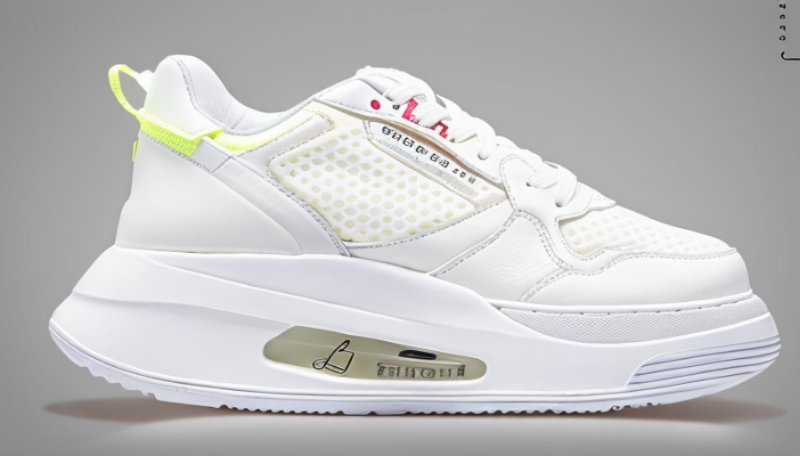
Can AI Shoe Design Replace Designers? Human-Machine Collaboration is the New Paradigm for 2026
When a sports shoe factory in Wenzhou compressed the design cycle of 200 styles from 45 days to 6 days, and when Douyin shoe streamers used AI to generate real-time "Western Cowboy Boots + Workwear Techwear" fusion styles, increasing new product conversion rates by 40%, the industry began to ask seriously: can AI shoe design replace designers? The answer is clear and firm: it cannot replace them, but it is completely reshaping the design value chain. AI does not replace the creative subject; instead, it strips away repetitive labor—such as manual last tracing, color trial-and-error, and size conversions across multiple platforms. Designers are now able to focus on style definition, cultural insight, and capturing user emotions. Under The New Black footwear design trends, AI has become a "super executive assistant," allowing complex style demands such as "exquisite elegance" and "workwear techwear" to be materialized instantly through semantic commands, truly unleashing human strategic creativity.
Design Process Optimization: From 7 Steps to 2 Steps, How AI Shortens the Footwear Development Cycle
Traditional footwear development requires going through requirement analysis → hand-drawn sketches → 3D modeling → material mapping → rendering → sampling → color correction and modification, taking an average of 28–60 days. In contrast, the new workflow based on the VALI Footwear AI Design Platform requires only two steps: inputting style keywords (e.g., "retro running shoe + lychee grain + low-saturation Morandi") → one-click generation of 8K high-definition images + structural decomposition diagrams. Its core lies in three underlying capabilities: minute-level style generation (as fast as 10 seconds), intelligent matching for 200+ shoe types, and a regional preference color library of 1000+. Particularly critical is the seamless integration of AI shoe design and 3D printing—the platform outputs standard OBJ/FBX formats, connecting directly to mainstream 3D printers and CNC equipment, eliminating intermediate file conversion loss. Dongguan shoe design companies report that sampling costs have dropped by 62% and small-batch quick-response speeds have increased 8-fold, proving the hardcore path of how AI shortens the footwear development cycle.
Cross-border Shoe Design Adaptation Techniques: From Selection-based Material Replacement to Multi-language Scenario Presentation
The biggest pain point for cross-border sellers is not a lack of inspiration, but rather "the same shoe needs to look lightweight on Temu, emphasize a workwear feel on Amazon, and adapt to Southeast Asian foot shapes on Shopee." This is the core challenge of cross-border shoe design adaptation techniques. VALIMART's solution is highly forward-looking: the platform has built-in specification databases for 10+ e-commerce platforms (including size charts, main image proportions, and copywriting templates) supporting one-click switching; furthermore, through the revolutionary selection-based material replacement function, it precisely replaces upper/sole materials (e.g., intelligently replacing the original PU upper with recycled mesh, while synchronously updating texture and light reflection), generating variants that meet European and American eco-labels or Middle Eastern luxury aesthetics in 3 seconds. Tests by Putian cross-border shoe enterprises show that the new product launch cycle has been shortened by 70%, and the accuracy of automatically generated multi-language detail pages has reached 98.6%, truly achieving "one source for multiple uses, one design, global adaptation."
Summary
From manual sketching to AI-driven, footwear design has crossed the efficiency tipping point. This is not a replacement of humans by technology, but using design process optimization as a fulcrum to leverage a triple leap in product power, responsiveness, and globalization capability. In 2026, companies that choose to embrace the VALI Footwear AI Design Platform are compressing "design decision cycles" into hours and transforming "market windows" into "growth explosion periods." Call 13764996475 now to book a free trial and see for yourself how AI makes every pair of shoes a commercial answer where data and aesthetics resonate.
VALI Footwear AI Design Platform
AI Shoe Design · AI Shoe Style Rapid Iteration & Scenario Presentation · Multi-platform Adaptation
Showroom Experience: Shanghai | Hangzhou | Wenzhou | Guangzhou | Quanzhou