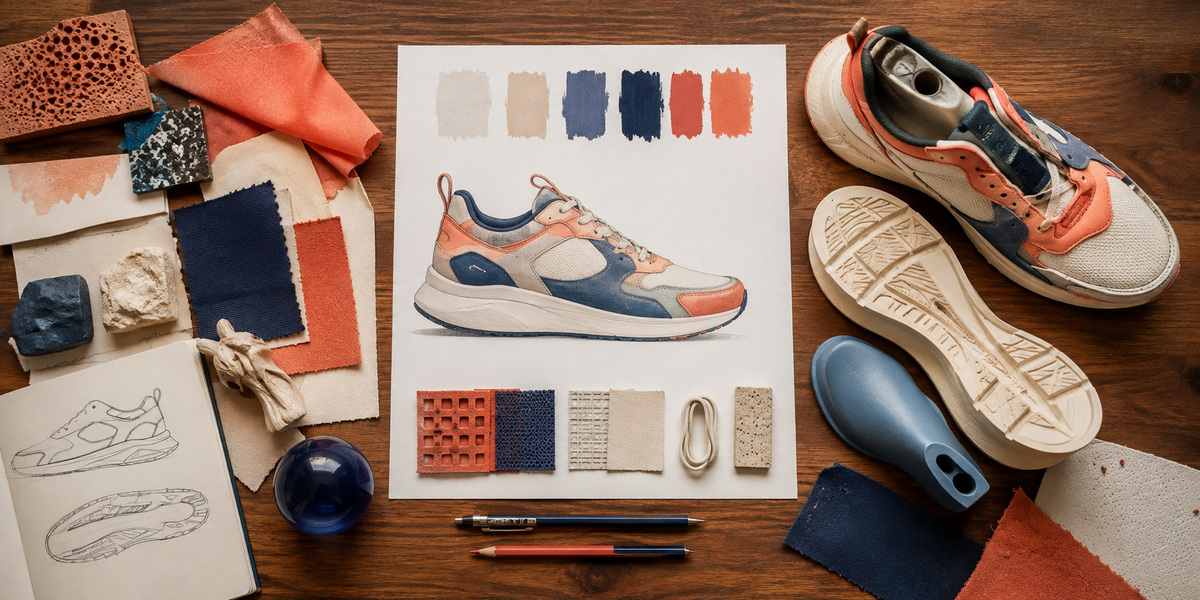
content below. slug (suggested; verify against the 301 mapping table before publishing): 2026-summer-sports-shoes-market-analysis. Yoast SEO title: 2026 Summer Sneaker Market Panorama: Competitive Analysis Framework × Sales Key Points × Material Trends - Valimart Yoast meta description: How to conduct a competitive analysis for summer sneakers? This article provides a reusable five-step framework, outlines key data points on industry scale and best-selling categories, updates material and design trend directions for 2026, and includes sample scenario-based marketing copy and AI efficiency tools. After publishing: request indexing in GSC; interlink with the Chinese version. Image note: the HERO image is embedded (base64) — it will display when pasted; no WP media-library upload needed. -->
2026 Summer Sneaker Market Panorama: Competitive Analysis Framework × Sales Key Points × Material Trends
This framework is compiled from Huilima Trend Team's "Spring/Summer Footwear Trend Planning" (original 95-page industry document). All data are annotated with their statistical year; 2026 trend directions are continuously updated by the VALI Trend Library.
I. Industry Fundamentals: Start with the Big Numbers
According to public industry research data: The Chinese footwear market size grew from USD 54.9 billion in 2016 to USD 69.9 billion in 2021 (compound annual growth rate of approximately 5%), and is projected to reach USD 97.5 billion by 2026 (compound annual growth rate of approximately 6.9% for 2021–2026). In segmented markets, mid-to-high-end and high-end fashion footwear lead in growth—projected to grow at compound annual growth rates of 5.5% and 10.2% respectively during 2020–2025. Consumption upgrading and premiumization remain long-term mainlines.
Sneakers and sportswear represent the most active track within this sector: Rising national fitness awareness and increased disposable income have transformed sneakers from "functional products" into "high-frequency fashion consumer goods," making them the category with the fastest competitive iteration speed.
II. Summer Sneaker Competitive Analysis: A Reusable Five-Step Framework
Competitive analysis is not about browsing through competitors' stores randomly, but rather executing fixed actions, fixed fields, and rolling cycles:
- Define Rankings: Extract platform bestseller lists (Tmall/Douyin 30-day, major promotion rankings) + international trends (e.g., LYST quarterly rankings—in the Spring 2022 TOP20 list, footwear occupied 12 spots, loafer demand grew 87% YoY, and the New Balance 550 collaboration topped the list, indicating a long "retro trainer" bonus period);
- Deconstruct Styles: Record each item in the TOP10: shoe shape, upper height, colorway, sole type, and selling point copy. Historical pattern examples (2022 Tmall 618 data): Women's skate shoes bestsellers were dominated by light colors, with basic versatile designs performing better in sales; Men's high-top skate shoes appeared frequently on lists, while chunky dad shoes remained consistently popular;
- Mark Price Bands: Concentrated bestseller bands are more important than individual item prices—for example, women's skate shoe bestsellers concentrated around the RMB 200 tier, while sports casual shoes were roughly double that price. Price bands determine the ceiling for material craftsmanship; define the band before developing styles;
- Extract Elements: Identify recurring design elements from rankings and content platforms (e.g., thick-soled cookie shoes, dad shoes, retro runners, techwear style, gradient designs), noting frequency of appearance and rise speed;
- Identify Opportunity Gaps: Cross-reference "high-volume elements × low-competition price bands." The resulting blank spaces indicate direction for new product development.
III. 2026 Summer Directions: Category and Material Trend Updates
Combining continuous monitoring of e-commerce sell-through and social media volume via the VALI Trend Library, promising directions for 2026 summer sneakers include:
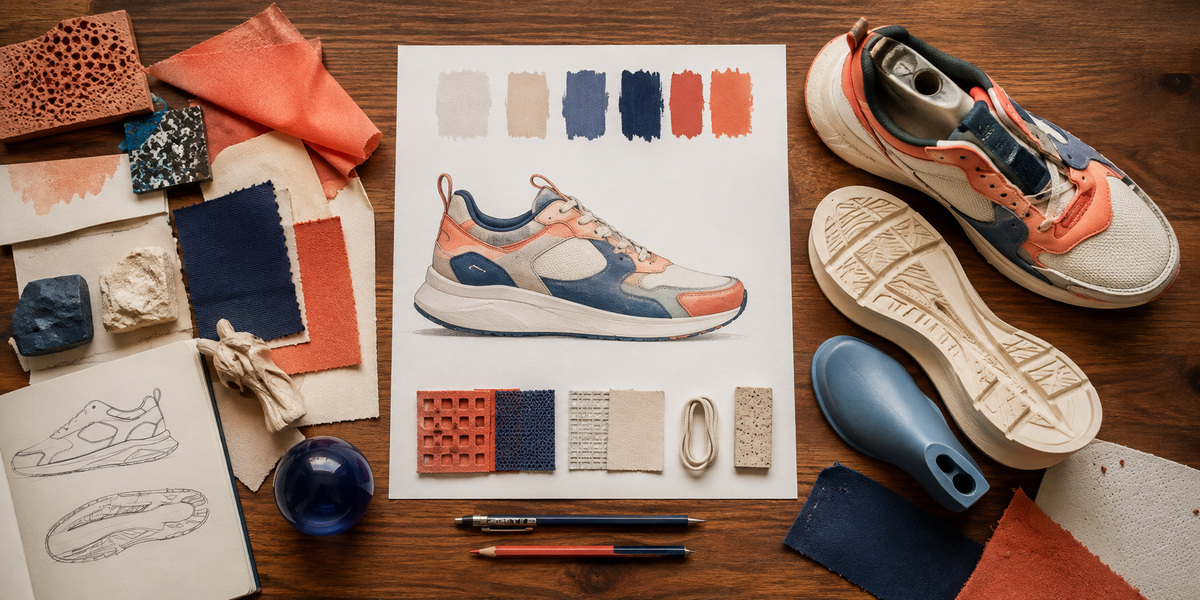
- Categories: Thick-soled casual and "cookie sole" styles continue; retro trainers (German Army Trainer/500-series lineage) show stable strength; breathable cutouts and clog structures are repeatedly validated during hot seasons;
- Materials: Eco-friendly recycled materials move from slogan to mass production (recycled mesh, recycled rubber outsoles); lightweight knit uppers continue to penetrate the market; suede and vintage leather surfaces reverse-penetrate from autumn/winter into summer;
- Design Elements: Low-saturation "old money color palettes" and neutral tones like cream yellow are rising; gradients and patchworks shift from explosive hits to standard options—differentiation must be sought in material texture and structural details.
A reminder: For trend judgment, use "three perspectives" for cross-validation—look at social media volume, look at 30-day sell-through, and look at international runways and rankings. Single signals are prone to misjudgment.
IV. Scenario-Based Copywriting Templates (Ready-to-Use Seeding Copy)
- Commuting scenario: "One pair replaces three: morning commute, afternoon stroll, evening gym session—comfort never drops off."
- Walking scenario: "Tested for 20,000 steps daily: heel cushioning + forefoot rebound, no blisters after a full day at exhibitions."
- Outfit scenario: "Versatile base color that pairs with skirts or pants; thick soles secretly add 4cm in height." (Fill in actual height increase value based on specific product)
- High-temperature scenario: "Tested at 38°C without stuffiness: cutout mesh + antibacterial insole, dare to go sockless even in summer."
- Price anchor: "Same silhouette as big brands, half the price—the difference is the logo, not the feel."
V. Automate This Analysis: Use AI to Turn Weekly Reports into Daily Routine
The pain point of the above five-step framework lies in "execution cost": rankings require manual monitoring, styles require manual deconstruction, and images require manual creation. The VALI AI Design Platform toolifies this chain—the Trend Library aggregates 30-day bestsellers and social media keywords, AI generates style images directly from candidate elements, and redesign/re-rendering is completed in minutes. Register for free at VALI, turn competitive analysis into a routine action taking just 10 minutes a day →
Frequently Asked Questions
Q: How often should summer sneaker competitive analysis be conducted? It is recommended to update rankings weekly and conduct deep-dive deconstructions monthly; add one extra round before and after major promotions (618/Double 11).
Q: How can small teams without a dedicated planning role manage this? Lower the barrier using fixed templates: The five-step framework in this article works with just one spreadsheet; delegate data collection and image generation to AI tools, leaving human resources for product selection judgment.
Q: Do historical data (e.g., 2022 rankings) still hold reference value? Yes—category lifecycles typically span years. The multi-year trends of skate shoes, dad shoes, and retro runners serve as the basis for judging "how much bonus period remains"; however, price bands and colorways must be refreshed with current season data.