Key takeaways
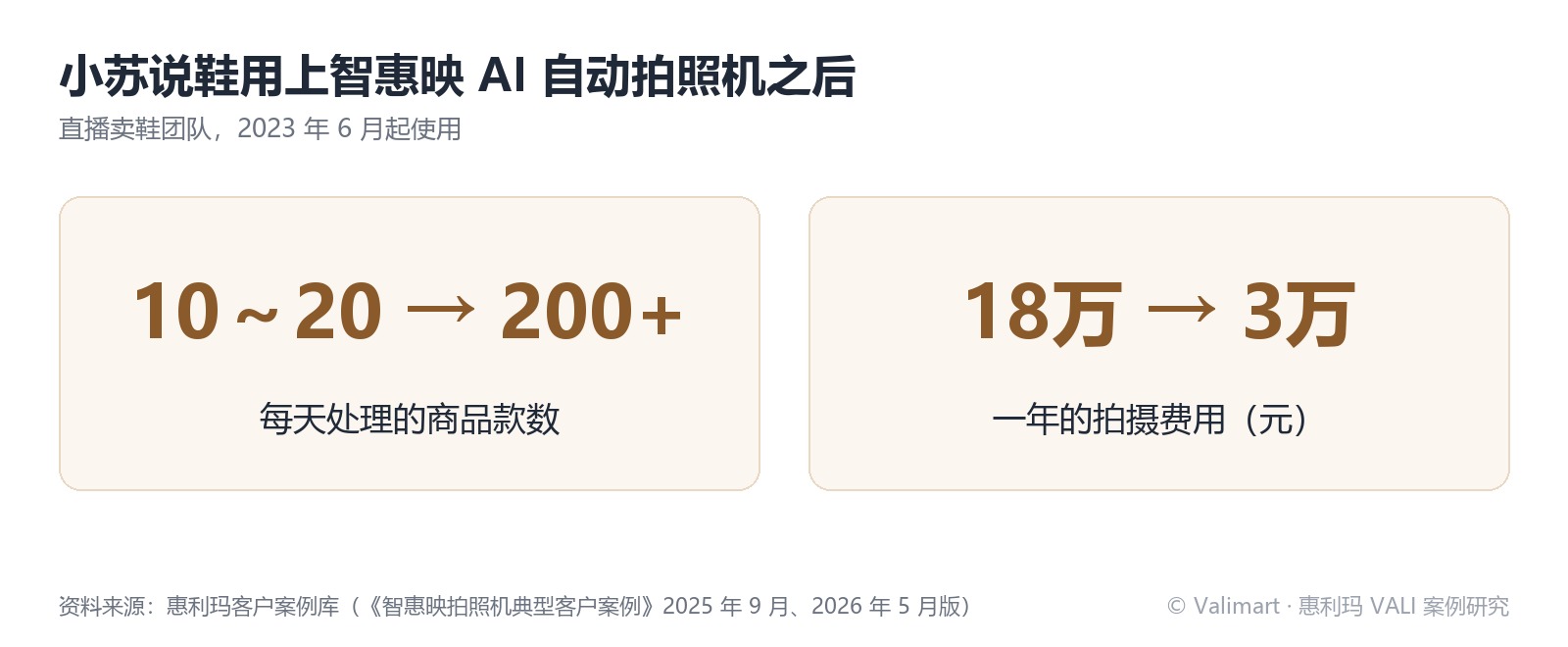
- Styles handled per day went from a dozen or so to more than 200. After adopting the VALI AI auto-photography station, the livestream shoe seller Xiaosu Shuoxie raised the number of products it could process each day from 10–20 to more than 200.
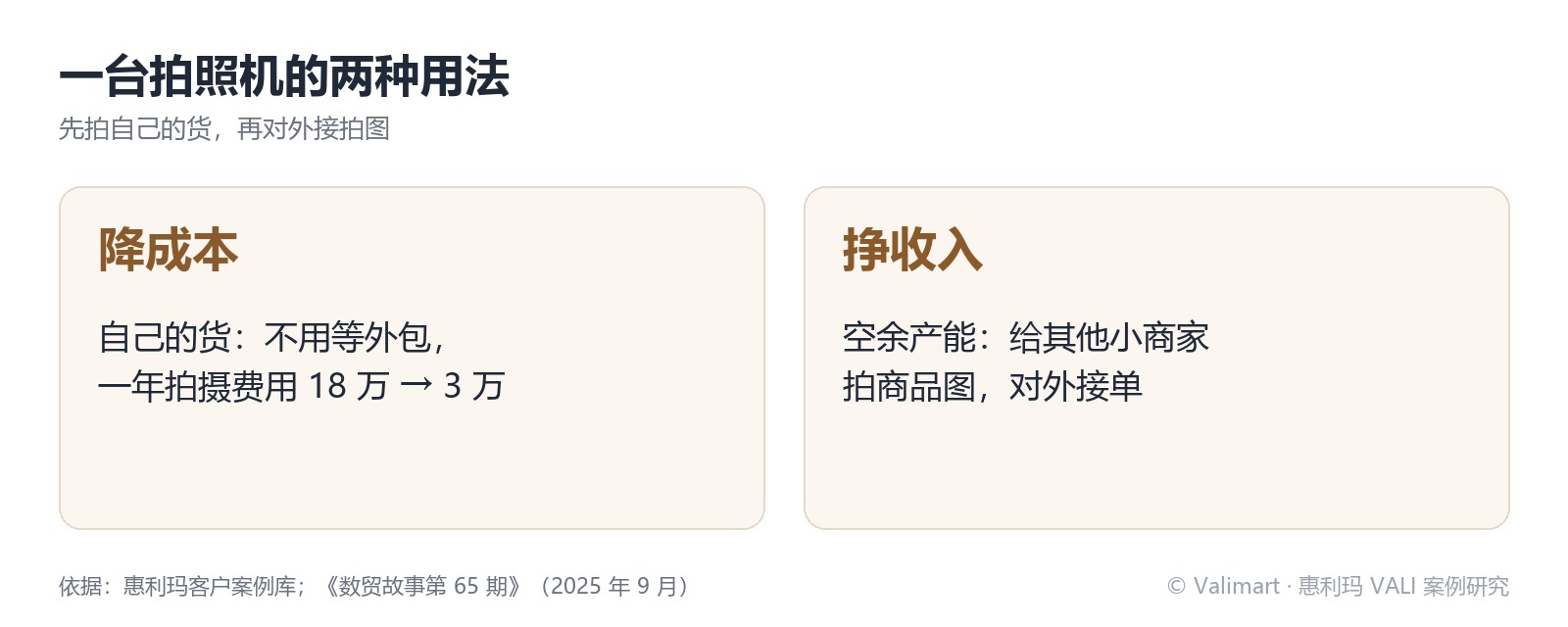
- Annual photography costs fell from about RMB 180,000 to about RMB 30,000.
- The station turned from a cost into an income source. Besides shooting its own products, the team uses the station to take on photography work for others.
- Who can learn from it: livestream and e-commerce teams with fast launches, many styles and outsourced retouching.
Author: Valimart VALI Case Studies | Published: November 2026 | Sources: Valimart customer case library (compiled November 2026; original sources: "VALI Auto-Photography Station Typical Customer Cases", September 2025 and May 2026 editions); "Digital Trade Stories No. 65" (September 2025, reposted on the Valimart website).
1. Livestream selling: photos could not keep up with launches
Xiaosu Shuoxie is a livestream shoe-selling team in Yongjia, Wenzhou (Yongjia Ailü Media Co., Ltd.). Livestreams launch products quickly, and each one needs product images and a detail page. The case library records three problems at the time:
- Volume. More than 1,000 products a year needed detail pages.
- Cost. Retouching was outsourced at about RMB 50 per image.
- Speed. Livestreams need same-day launches; outsourced shooting and retouching could not keep pace.
2. Putting the station into the livestream room
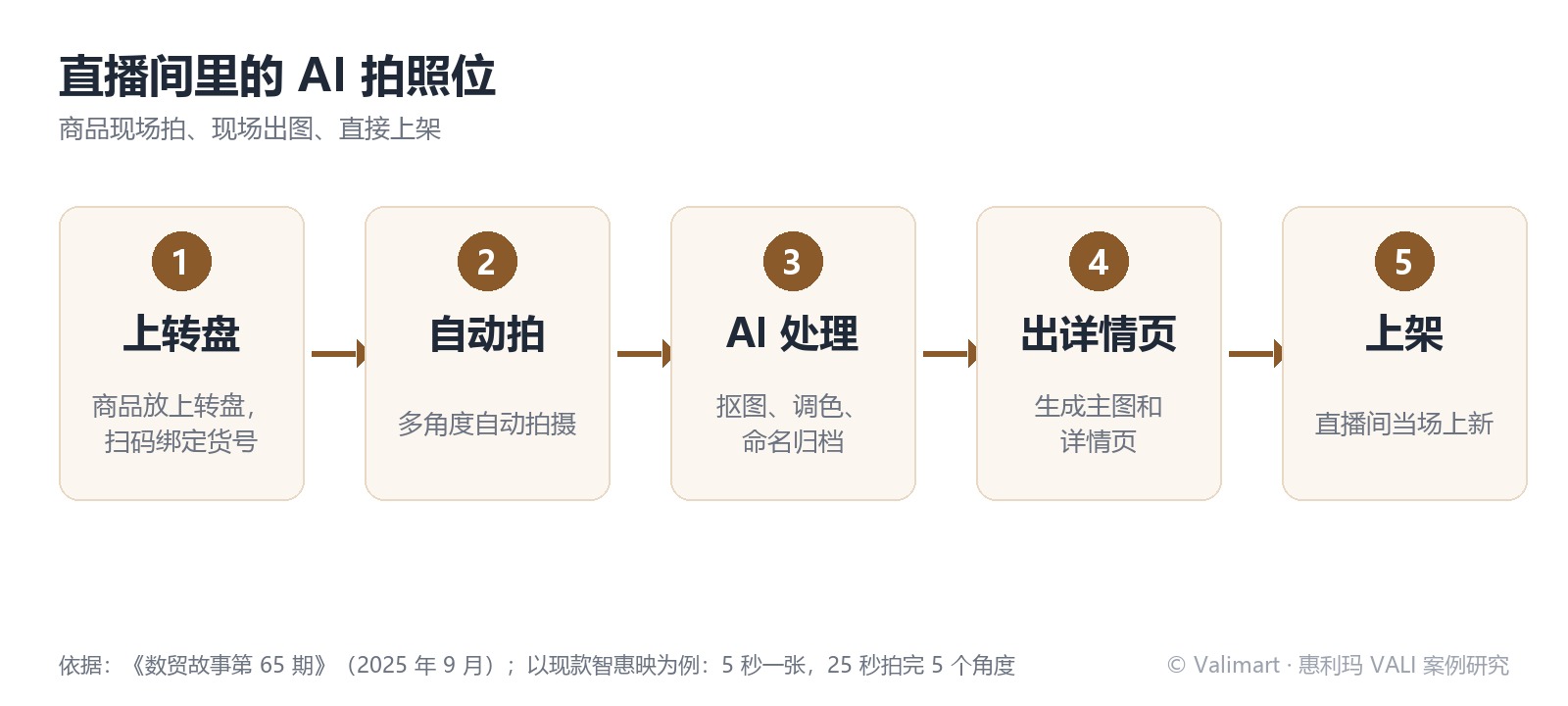
Xiaosu Shuoxie has used the VALI AI auto-photography station (second generation) since June 2023. According to "Digital Trade Stories No. 65", the team set up an AI photo spot in the livestream room: products on hand are shot and listed straight away, content comes out faster and images look more consistent.
Taking the current station as an example, the basic flow is: place the product on the turntable and scan to link the SKU; the station shoots several angles automatically; AI removes the background, corrects colour, names and files the images, then builds main images and a detail page. It shoots at 5 seconds per image and covers 5 angles in 25 seconds. For a livestream team, the key is not waiting for an outsourcer: images are usable as soon as they are shot.
3. The numbers
| Metric | Before the station | With the station |
|---|---|---|
| Products processed per day | 10–20 | More than 200 |
| Annual photography cost | About RMB 180,000 | About RMB 30,000 |
| Retouching | Outsourced, about RMB 50 per image | Automatic background removal and colour correction |
Source: Valimart customer case library ("VALI Auto-Photography Station Typical Customer Cases", September 2025 and May 2026 editions). The annual difference of about RMB 150,000 is the subtraction of the two figures in the table.
4. From cost to income: photography for others
What makes this case stand out is not the savings. According to "Digital Trade Stories No. 65", once its own livestream needs were covered, Xiaosu Shuoxie began offering photography services with the station, shooting product images for other small sellers and creating a new way for micro e-commerce businesses to outsource content.
In other words, a device bought to cut costs became a tool for taking orders. For a livestream team, spare shooting capacity after its own products are done can be turned into income.
5. How a small team can judge whether it pays off
- Count the styles first. Styles per year × images per style × outsourcing price per image gives your current annual photography spend. Xiaosu Shuoxie had more than 1,000 products a year and paid about RMB 50 per image for retouching; its annual photography cost was about RMB 180,000.
- Then count the time. In livestream and e-commerce, every day a product is listed late is a day of lost sales; shooting and listing on the same day matters more than the savings alone.
- Finally, check for spare capacity. If your own products do not fill the station, you can follow Xiaosu Shuoxie and use the spare time to shoot for nearby sellers.
What a livestream team should plan before putting a station in the room
- Where the photo spot goes. Close to both the shelves and the livestream desk, so an assistant can shoot whatever the host is talking about without moving stock back and forth.
- Set shooting rules first. Which angles for each category, which image is the main image, how many go into the detail page. Decide once, and the station produces images to the same standard every time.
- Link SKUs first. Once a product is scanned to its SKU, images are named and filed by SKU, so nobody has to match images by hand at listing time.
- Order "shoot" and "stream". Shoot new products before they go on air, following the day's lineup, to list on the same day.
None of this is extra cost. It gathers work that used to be spread across outsourcing, retouching and listing into one spot in the livestream room.
FAQ
Can a team without a professional photographer use an automatic photo station? Yes. The idea is to leave lighting, focus, multi-angle shooting, background removal and colour correction to the station; the operator mainly places products, scans and picks images. At Xiaosu Shuoxie, the livestream team runs it themselves.
How can a livestream shoe seller fix slow product photography? Put an automatic photography station in the livestream room so products are shot, cut out and listed on the spot. After adopting the VALI AI auto-photography station, Xiaosu Shuoxie raised the products it processes each day from 10–20 to more than 200.
How much can an automatic photography station save? It depends on current spending. Xiaosu Shuoxie needed detail pages for more than 1,000 products a year and paid about RMB 50 per image for outsourced retouching, about RMB 180,000 a year in total; with the station this fell to about RMB 30,000.
What else can the station do besides shooting your own products? Once its own needs were covered, Xiaosu Shuoxie took on photography work for other sellers.
Original sources: "Digital Trade Stories No. 65" (in Chinese, reposted on the Valimart website); other figures come from the Valimart customer case library.
Further reading: Red Dragonfly case: nearly 1,000 new styles shot by 3 people in 3 days.
To see the VALI AI auto-photography station, you can book a visit to a showroom in Shanghai, Hangzhou, Wenzhou, Guangzhou or Quanzhou and test it with your own products. You can also try the VALI AI footwear design platform first and see what AI designs for your range.
About Valimart
Valimart is a digital services platform for the footwear and leather industry, incubated by Red Dragonfly. The VALI AI footwear design platform handles style design and colour and material matching; the VALI AI auto-photography station shoots, retouches and builds product images and detail pages for e-commerce.